
His most recent project, BLACK NOISE—which was created with an ensemble of improvisers and noise musicians—feels like a rupture: a moment where his solitary, self-sufficient process cracked open into something communal, combustible, and newly dangerous. For an artist who’s historically mixed, mastered, produced, and conceptualized nearly everything alone, surrendering control wasn’t a softening—it was an escalation. Barnes describes the shift less as reinvention than as a widening aperture, a chance to let other musicians reroute his instincts and force his ideas into unfamiliar territory. That tension—between authorship and dissolution—is the current running under his work now.
Ahead of his performance at Pique Festival, Barnes is thinking about community not as a backdrop but as a medium: a site where queerness, Blackness, experimentalism, and pleasure collide in real time.
With BLACK NOISE, you went from solo-produced records to working with an ensemble of experimental musicians and collaborators. What pushed you to shift toward this collaborative mode—and how has that changed the way you view your music identity?
It was definitely part fate, part conceptual. It stemmed from a tweet that I made in 2022 about wanting to work with free jazz and noise musicians to essentially take the conceptual framing of my then newly released album For the Love of Drugs into a different musical context, and it led to this transformative, amazing experience with the BLACK NOISE album and Ensemble crew. Personally, it hasn’t changed my core identity much, but it has definitely created a set of conditions and generated new ideas that I am excited to explore.
As someone who writes, produces, mixes, masters — often by yourself — what has letting go and working with other musicians (specifically on BLACK NOISE) taught you about control, authorship, and trust in art-making?
It was a great experience. Making albums alone is a very deeply internal process for me that is almost involuntary, I would say, so working on BLACK NOISE was a very novel experience that generated both excitement and difficulty for me at times. However, it was necessary to expand my practice, and I learned so much from brilliant musicians and the music that we made — lessons that I am carrying forward into my next record.
You often challenge genre boundaries — mixing R&B, hip-hop, electronic, industrial, and more. Do you see genre as a tool, a limitation, or something to dismantle entirely? What does genre-defying mean to you at this point in your career?
I have a very strong opinion on this. I see genre as a way of placing myself in conversation with certain scenes or different aspects of culture, but when it comes to creating, I have never thought in terms of genre. Not to be bombastic, but when I’m creating, I tend to think in terms of concepts and ideas, and then create music from that framework. I sort of need a broader concept in order to spark any sort of creative impulse, and that means new sounds or creative tools tend to be the catalyst for a new shift. Once I’ve made one thing in a certain style, I don’t see the need in repeating or retreading that. I’m not even really capable of doing so without feeling bored or stagnant.
I also don’t want to be defined at all, so a lot of the genre maneuvering and mashing is about ensuring that, artistically, I can’t easily be pinned down. I want the freedom to go in whichever direction I want.

In a landscape that often pressures artists to conform — to genre, to marketability — do you see your work as resistance? If so, what are you resisting, and what are you trying to build instead?
I try to do as much as I can within a medium that has already been deeply commodified and compromised. I think that a political and historical reading of sound shows just how threatening it can be to power. Musicians are not really in a great position, no matter how radical or politically literate your work is, because of the structural and material conditions that allow for and predetermine the art in the first place. The economic conditions of the industry are brutal for the vast majority of musicians, and I don’t think that you can disentangle that from the work itself and what we allow music to do and be within the world.
I quite resonate with your story, growing up queer in a small town like Kitchener, then moving to a bigger city like Toronto or Montreal. How have these different environments shaped your artistic voice, sense of community, and what you want to say through music?
Kitchener… love her down, but I spent most of my life thinking “I can’t wait to get out of here.” I moved to Toronto as soon as I turned 18 to pursue music for about eight years and I got, well, not nearly as far as I wanted. Completely isolated—no community. Turns out that experimental hip hop and gay, industrial R&B from a bookish rap/singer are a bit of a hardsell.
So I pivoted, moved to Montreal, and got embedded in the artistic community, found my people, and moved my career along a bit further. I think that I became defiant, much more politically literate and outspoken, and extremely sharp in my artistic instincts throughout that process.
What do you hope your audience experiences when they listen to or see a live performance of yours — especially those unfamiliar with experimental or noise-inflected music? Do you aim to challenge, to evoke discomfort, to heal, or something else?
I hope that they feel. I hope to have an impact on them. My performances tend to be energetic and dance heavy—a part of me is aiming for people to have fun and lose themselves in the moment and music, but at the core of it, I just want to make people feel something. One of my favourite shows was when I played Sappyfest earlier this year—it was just complete synergy between the crowd and I.
Pique is a festival of underground music, experimental art, radical self-expression and community connection. With your upcoming set, how does the idea of “community + experimentation + accessibility” factor into how you approach a live performance for this festival specifically?
I’m trying to bring it all together—energy, experimental dance music that can reach and touch people, dancing, queerness, Blackness, giving people a full communal experience of catharsis, pleasure and emotional/physical release. When I was constructing this set I was just like, “How can I just bring the energy and give people a real EXPERIENCE?” I think that it’s gonna be a great show. I’m hyped.
Pique’s lineup alongside you includes experimental electronic producers, ambient-glitch artists, afro-rap, ballroom acts, and installation/performance art. What does it mean to you to be part of this lineup— do you see your performance as dialogue (or contrast) with the other artists and disciplines on the bill?
I love all of the artists on the lineup—Korea Town Acid is phenomenal. I am honoured to be part of such a stacked bill of incredible talent, and I think that Debaser did an excellent job of curating. It feels special.
For people coming into your set not knowing much about your music — maybe first-time listeners — what do you hope they leave with after hearing you at Pique? What feeling, question, or challenge do you want to plant?
I want them to think “Damn, what an experience. I danced my ass off.”
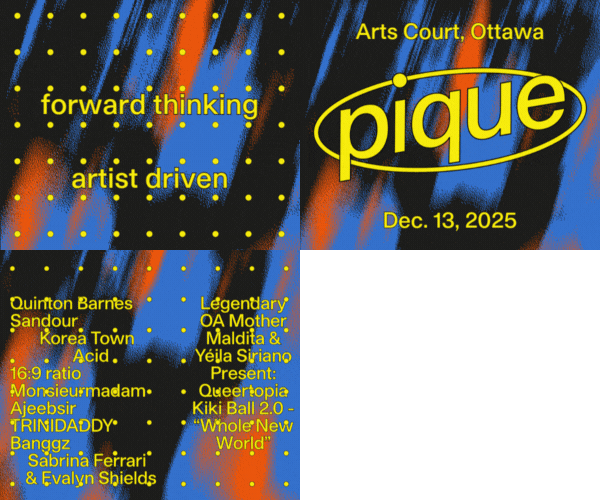
Pique’s final installment of 2025, featuring Quinton, is on Dec. 13, tickets here.
By Sam Hendriks
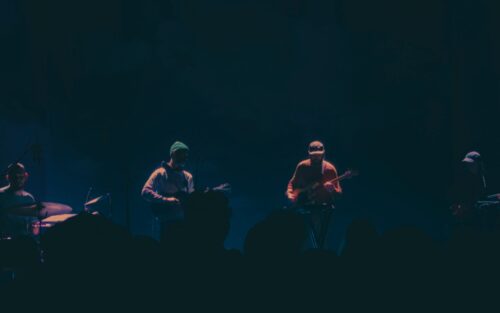
Touring their sophomore record, 2, the Saskatchewan indie outfit delivered grin-inducing earnestness at Vancouver’s Vogue Theatre.
By Megan Magdalena
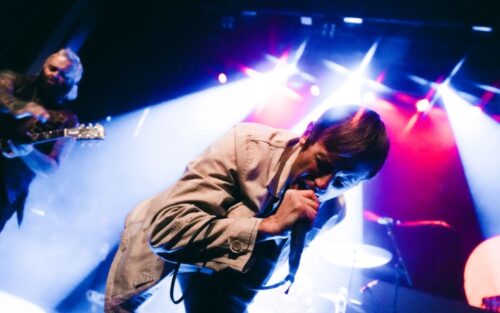
A sold-out night at the Vogue Theatre brought Warped Tour memories roaring back.