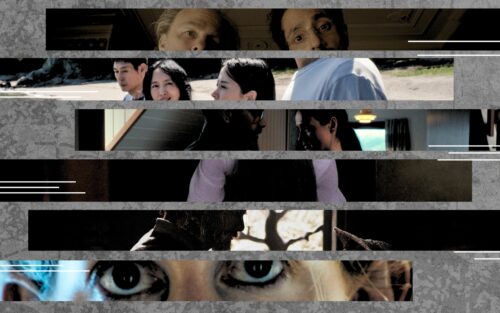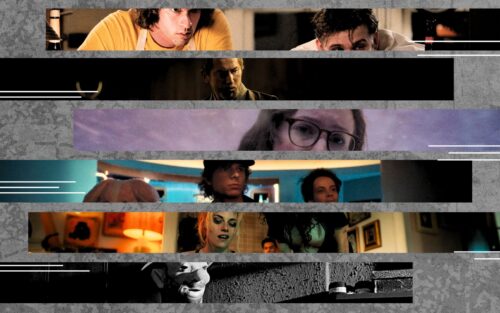
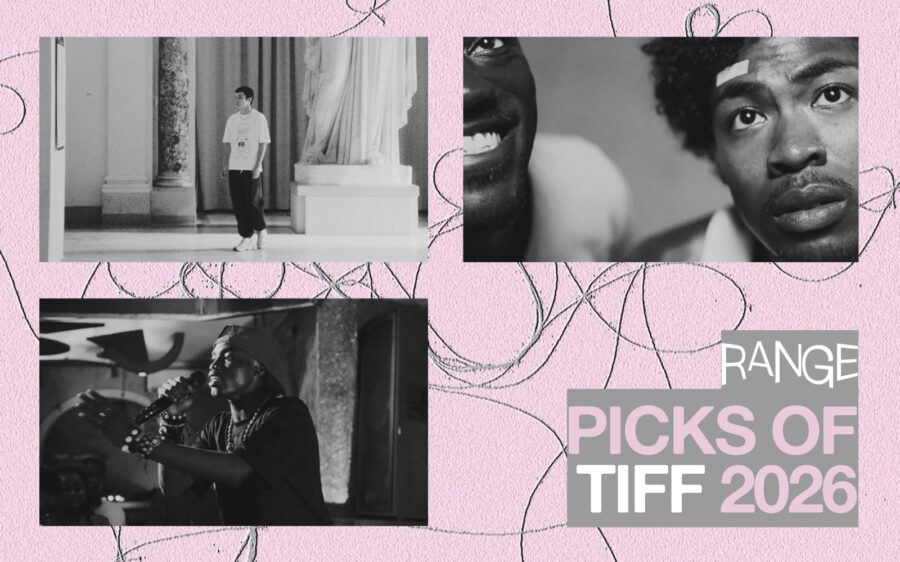
Across 11 days and a programme packed with more than 290 films, TIFF 2026 brought out the inner cinephile in us all, filling our veins with popcorn butter and corroding our corneas with Midnight Madness. From a novelistic examination of class and privilege to a Heritage Minute on acid to a comedy that turns the theatre into an identity crisis, these are the films that burrowed their way into the minds of RANGE film editor Prabhjot Bains and contributing writers Gökçe On and Ozioma Nwabuikwu—along with one colossal disappointment.
Patient but never inert, intellectually rich but never preachy, Lee Chang-dong’s gorgeous, layered novel of a film—his first since 2018’s Burning—dissects modern class, privilege, and exploitation with piercing nuance and aching specificity. Following two couples, one brutally suppressed by anti-union forces and the other moneyed documentarians who want to tell—or exploit—their story, Possible Love avoids positioning its characters within tidy dichotomies. Instead, it subtly examines how social bonds twist and sway under the ever-present winds of capitalism.
Every gesture is charged with doubt, shame, desire, and tenderness: one side of the social order is afforded the pleasure of observation with few strings attached, while the other is puppeted by those very strings. The result is a quiet yet overwhelming masterwork that revels as much in moral ambiguity as it does moral gravity, finding in human connection a great unifier, however compromised and imbalanced it may be—a rare bastion that hasn’t yet been carved up and sold.
It may be reductive to label writer-director Jordan Firstman’s electric, heart-swelling Club Kid “Anora meets Big Daddy,” but the trite comparison is key to the film’s intoxicating mix of style and sincerity. From its first richly observed frame, it immerses us in the milieu of New York City’s queer club scene with immediate texture and lived-in spirit, drawing its characters and dynamics with such aching authenticity that it washes over you like a tidal wave of uppers, downers, and everything in between.
Sure, there’s the accidental-dad plot: Firstman’s party promoter and purveyor of party favours finds himself saddled with a 10-year-old kid—the product of a half-remembered hookup—and forced to reckon with the responsibilities of parenthood amid the chaos of New York nightlife. But when it’s crafted with such emotional specificity and kinetic energy, and boasts a killer soundtrack featuring Massive Attack, Cocteau Twins, Ninajirachi, and Death Grips, to name a few, does it even matter?
Marie Atlan’s mesmerizing debut, La Gradiva, unfolds as the great hangout film of the festival. Following a group of messy, confused, and horny high school students on a trip to Pompeii, Atlan’s film plays out as a hypnotic series of conversations—many of them simply a teacher lecturing her class on volcanoes and paintings—that erupt with allegorical and emotional weight, intricately traversing and ultimately entwining personal desires, class tensions, and foundational myths.
Puberty becomes as volatile and explosive as the eruption of Mount Vesuvius, rendering the smallest interactions seismic events, where the myths and stories that shape us crack and crumble under the weight of hormonal fault lines and tectonic desire. Lush and hypnotically framed, La Gradiva brings the ruins of the ancient past to life like little else.
Germany’s official submission for the 2027 Oscars, Sandra Wollner’s Everytime offers a different kind of treatise on the much-explored stages and processes of grief, while secretly doubling as the greatest video game movie ever made. Intertwining lush, naturalistic framing with mixed media—old digital photographs, text chats, audio recordings, and, most stunningly, video games built using Vintage Story, a Minecraft-like sandbox—the film slowly melds and dissolves the line between reality, dreams, and memory.
It all coalesces in a breathtaking final act that is as confounding as it is haunting, unleashing a deep swell of emotion as the round sun becomes square and our loved ones become paradoxically more tangible and ethereal. One would think grief might become easier with technology, with greater access to digital fragments of our departed loved ones, but Wollner’s film posits the opposite: the more we have to remember them by, the deeper and more confusing their absence can become.

“What’s wrong?” … “People.” A snappy, wry response that anchors one of many beautifully observant moments in Mike Leigh’s latest, intricately lived-in slice of life, Tender Loving Care. But as much as that response expresses frustration with mankind’s increasingly individualist failings, it also holds onto the idea that other people are all we have; they’re our salvation and our damnation.
It’s a revelation Leigh taps into through a deep well of generosity and compassion in the way he observes his characters—a pair of social workers and an aging couple—allowing their frustrations and absurdities to peer into a wealth of hard-won experience that we never actually see unfold on screen. It all blissfully accumulates into something both quietly devastating and unexpectedly hopeful: a textured portrait of family, kinship, and aging. A masterful coda Leigh could only deliver after a mythic canon spent probing the fractures and fault lines of everyday human connection.

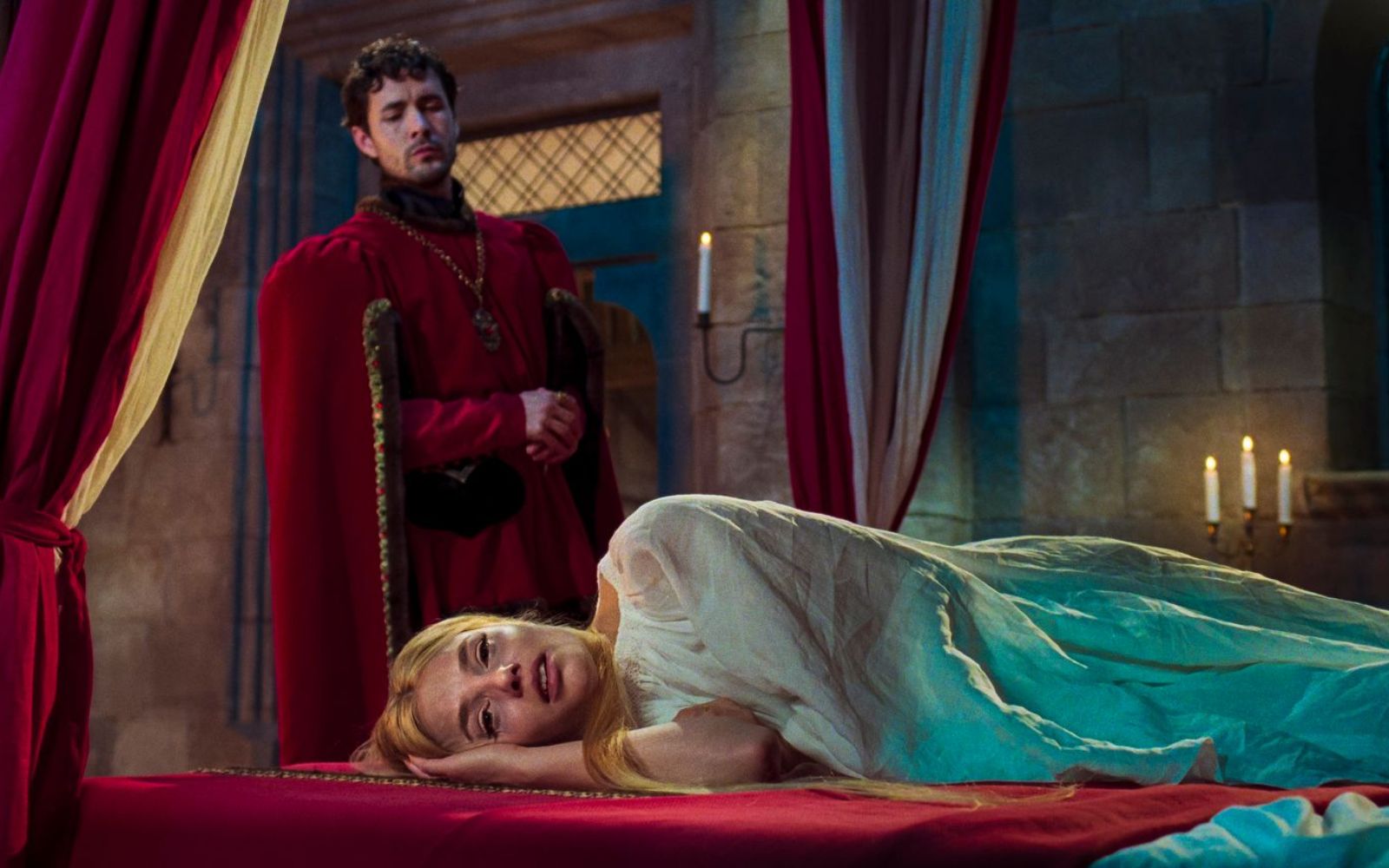
Though some detractors might say this film is too long, they’re also missing the point. Let Anna Biller take you away on a perfectly crafted journey in her rendition of the famous Japanese ghost story “Yotsuya Kaidan.” From the costuming and makeup to the set design, this is a dreamy, theatrical, campy masterpiece that gorgeously recalls the Corman-Poe cycle of the ’60s.
If you’ve been fatigued by the dull (and rather boring) colour grading of so many recent releases, you might cry tears of joy watching The Face of Horror. Biller’s film makes for the perfect ode to classic Technicolor. Paired with the prosthetic designs, every frame is visually interesting and engaging. Along with being incredibly beautiful to look at, its Old Hollywood-esque performances are highlighted by expressive close-ups and purposeful camerawork. This is simply a joyful watch.
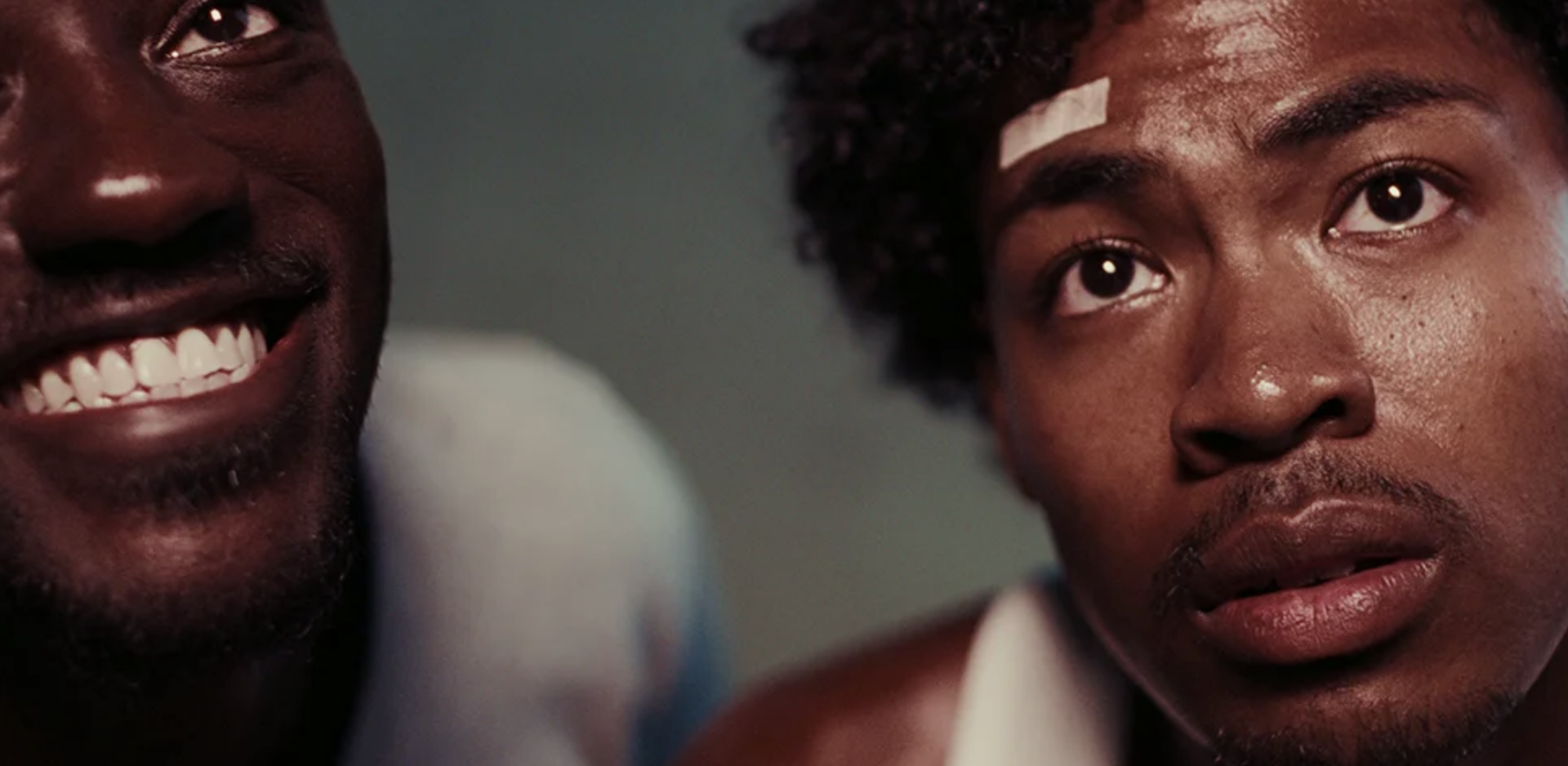
Serville Poblete’s third feature, Sunburn, feels strangely familiar—even if you’ve never lived through a Toronto summer. While, yes, the city itself is somewhat of a tertiary character, what makes this film so great is the incredibly natural and free-flowing dialogue. As you witness these characters having the most mundane conversations with friends and family, it’s impossible not to find a piece of yourself in them.
With its soft colour grading and intimate shots around the city, Sunburn extends an invitation to the audience that’s hard to turn down. That said, it would be unfair to talk about the film without giving credit to its ensemble. Real-life best friends and roommates Joshua Obra and Dashawn Blackwood give remarkable performances, and the rest of the cast matches their chemistry to make the perfect summer film. With the way you can practically smell the sunscreen through the screen, Sunburn Summer is inevitable.
TIFF veteran Fernando Eimbcke returns with Flies (Moscas), a delicate story about not choosing, but rather falling into, a chosen family. Eimbcke’s lighting and sound design choices really shine through, especially with the film being in black and white. The sound design turns the story into an immersive experience and, if possible, it should be heard in a movie theatre.
While the film is slow to start, with plenty of mundane, lingering shots, the payoff is completely worth it. Eimbcke takes his time letting his audience bond with the characters, and by the end of the 101-minute runtime, he has taken us through the complete spectrum of human emotions.
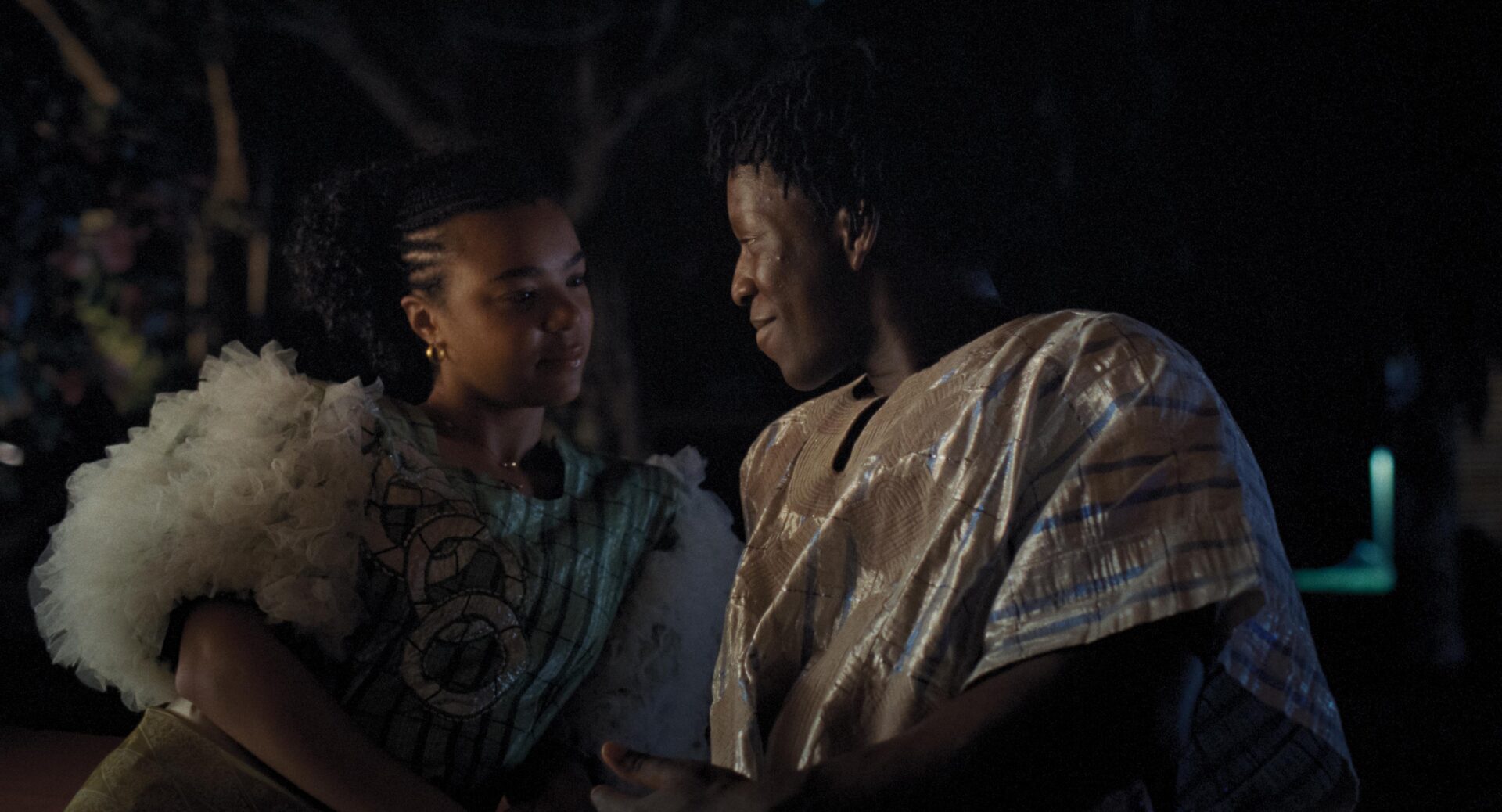
In Arie and Chuko Esiri’s second feature film, Clarissa, the Nigerian auteurs may borrow from Virginia Woolf’s beloved Mrs Dalloway to support the structure of their heartfelt story, but the substance is entirely a product of their deft directorial touch. Nigeria’s complex, turbulent story is wholly multicultural, and seeing it so poignantly represented not only across ethnicity and language but also in time and place makes for a deeply satisfying journey.
The Esiri brothers weave a stunning tale about unrequited love, PTSD, and enduring friendship. Sophie Okonedo delivers a subtle yet moving performance as present-day Clarissa, and India Amarteifio follows suit as her younger counterpart.
Rafiki Fariala’s second feature chronicles a fight to live and remain creative under impossible conditions. Meet Robert, a young Congolese refugee living under military occupation in Bangui, Central African Republic. With both parents in jail, four younger siblings to take care of, and final exams to ace, Robert’s work is surely cut out for him. But he also dreams of being a musical artist and rapper.
As these priorities clash and life closes in, Fariala’s camerawork drops us right in the middle of the action. It’s hard not to root for Robert’s unbreakable spirit and pure love of art. His performance is further anchored by the community that rallies around him to help him realize his dreams in an often-hostile society. Congo Boy is a life-affirming portrait of one of the world’s most overlooked groups: African refugees.
When a quiet, sheltered housewife decides to audition for her local community theatre’s musical, Nosy Neighbours—an original production conceived by the film’s director, Jesse Eisenberg—it doesn’t go as expected. In fact, it goes off the rails completely.
There’s committing to the bit, and then there’s whatever Julianne Moore’s character does as she diligently takes on a small but key role in the play. Pushed into an identity crisis by the cantankerous director, Paul Giamatti’s Jerry Blankenbuhler, the pair’s dynamic offers a thrilling contrast worthy of the Oscar buzz pervading every frame.
In The Debut, Eisenberg’s third turn as writer-director, the art of the musical is parodied as often as it is praised. How far are you willing to go for your art? How much of a character are you playing in your real life? These are some of the questions posed by Eisenberg in this wonderfully odd film.
Operating somewhere between a Heritage Minute on acid and a psychedelic historical record, Matthew Rankin’s Ladies and Gentlemen, Brian Mulroney unfolds as an episodic television feed broadcast from the “Twilight Zone,” indulging in VHS filters, strobe effects, crazy collages, and kooky title cards (“this episode is brought to you by the Toronto Millionaire Relief Initiative”) to trace the political manoeuvres of the 1976 Conservative leadership convention and the events that ultimately paved Brian Mulroney’s path to becoming prime minister in the 1980s.
The result is not only the most undeniably Canadian film of the fest, but a feat of entrancing storytelling that somehow fits in a holographic rendering of Pierre Trudeau as a sci-fi villain and a fictional “Diefenbaker Museum of Progressive Conservatives”—and makes it all work as a sharp critique of the ’80s neoliberal order that the film argues we’re still living under today. (Prabhjot Bains)
TIFF’s slate had many films about people’s experiences with the AIDS crisis of the ’80s, so it’s rather surprising that the most compelling among them was a TV show. Despite all odds, this show is colourful, full of love and life. Oxygen Masks Will (Not) Drop Automatically stands ten toes down that queer joy is not only defined by moments that are bound to be celebrated, but also by the small, desperate moments when you need to remind yourself to hold onto those around you.
The show is an ardent reminder that there is so much life to be lived, even in the face of unimaginable horror. (Gökçe On)
The prolific filmmaker behind Trainspotting and 28 Days Later, Danny Boyle, brings his energetic style to the biggest dud of the festival, Ink. A dizzying cacophony of brash formalism and energetic excess, Boyle—armed with a “Sorkin-lite” script from James Graham—attempts to trace the machinations that killed real, honest journalism and ushered in our current, hellish age of tabloid sensationalism and pornographic reporting.
But as intoxicating as Boyle’s cranked-out, punk-rock tics can be—frenetically shifting between whip-pans, Dutch angles, smash cuts, and abrupt shifts to a monochromatic palette—they eschew any meaningful interrogation of the class appetites and cultural conditions that enabled the cruel machinery of tabloid media. For a film about the death of serious journalism, Ink is remarkably content to traffic in the same cheap sensationalism it claims to skewer. Not to mention the ill-advised, distracting use of AI-generated visual effects. (Prabhjot Bains)