

Wrené Nova
Welcome to the end of 2025, the halfway landmark in a decade defined by technological takeover, corporate greed, and the unremitting erasure of the working class. This is the turning point in a decade that, for many—especially young adults—has been the worst they have ever lived through. I have often thought to myself, I would have never expected life to be like this. Where the hell am I? Why am I such a failure, and why can’t I find any meaning in my life?
I have felt this bone-deep grief since before the beginning of the pandemic, paired with an animal desire to break out of my skin because I just couldn’t stand it here. My mind was a frayed organ, always static with electricity but with no fuse to break or snap. I remember the heaviness behind my eyes and the feeling of cotton in my head. I knew something was wrong, but I chalked it up to my “poor mental health,” and escaped into music production to live in an alternate world that I was in full control of. Sometimes, I looped the same couple of synth bars in my headphones while drooling onto my laptop’s keyboard. But even then, I pushed myself to finish. I wrote songs with poetic lyrics about wanting clarity, connection, and freedom. My art was going to save me, and I was convinced I was going to “manifest” being rescued.
And then there was always the moment when I forced myself to release my music. It only added pressure and resistance to my already compromised bandwidth. But I played the game—I learned the “business,” watched countless assholes on YouTube talk about indie-artist “strategy,” and bought Groover and SubmitHub credits, giving money to self-inflated jerks for their “feedback,” with my tracks placed “in consideration” for their bloated Spotify playlists. Oh, Spotify—even holding your name in my mouth makes me want to chew somebody’s head off.
It was like staring into a black hole—that fucking Spotify for Artists dashboard. The little animated widget mocking me: “Zero people are listening to your music right now.” And yet, I pushed forward. I campaigned. I did all I could, as one person, to spread the word about my Spotify. I used to cover the number of listeners on the screen with my hand so I wouldn’t melt down as I pitched to countless playlists.
And then came the “artist PR” agencies, burning people like me out of hundreds to thousands of dollars, only to provide one feature on some dusty, pay-for-coverage blog. Frustrated and disillusioned, I began to think about investing my money in my own advertising on Facebook—and I’m grateful that I held off for as long as I did. I couldn’t ignore the reality of being exploited by the streaming race, and yet everyone around me was still shaming me for not working hard enough on my marketing, for not “promoting” my music, saying I “sucked” because of my low monthly listeners, and that I needed to make my sound “marketable” to conform to playlists. Release after release, I pitched to editorial playlists. I categorized myself as “avant-garde” and “alternative,” but my music was never a fit. Too “weird.” Too nuanced, too soulful, and too subversive.
Now, I’m ripping off Spotify’s ugly, gaslighting mask to reveal the vacuousness that has been sucking the life out of everyone with a soul. I wasn’t being pushed because I was never meant to bootlick for the corporate agenda. Now that it’s coming to light that Spotify’s leadership is funding autonomous killing drones, and using data from the artists it exploits to train its AI music tools, I am so happy that I jumped ship—even if it feels like wading through freezing water for a while. This goes for all of these corporate platforms and billion-dollar companies. We are all on board a massive sinking vessel. Step outside and look around, and face all the signs of an impoverished society: lack of housing, affordable food, and people dead tired from being overworked.
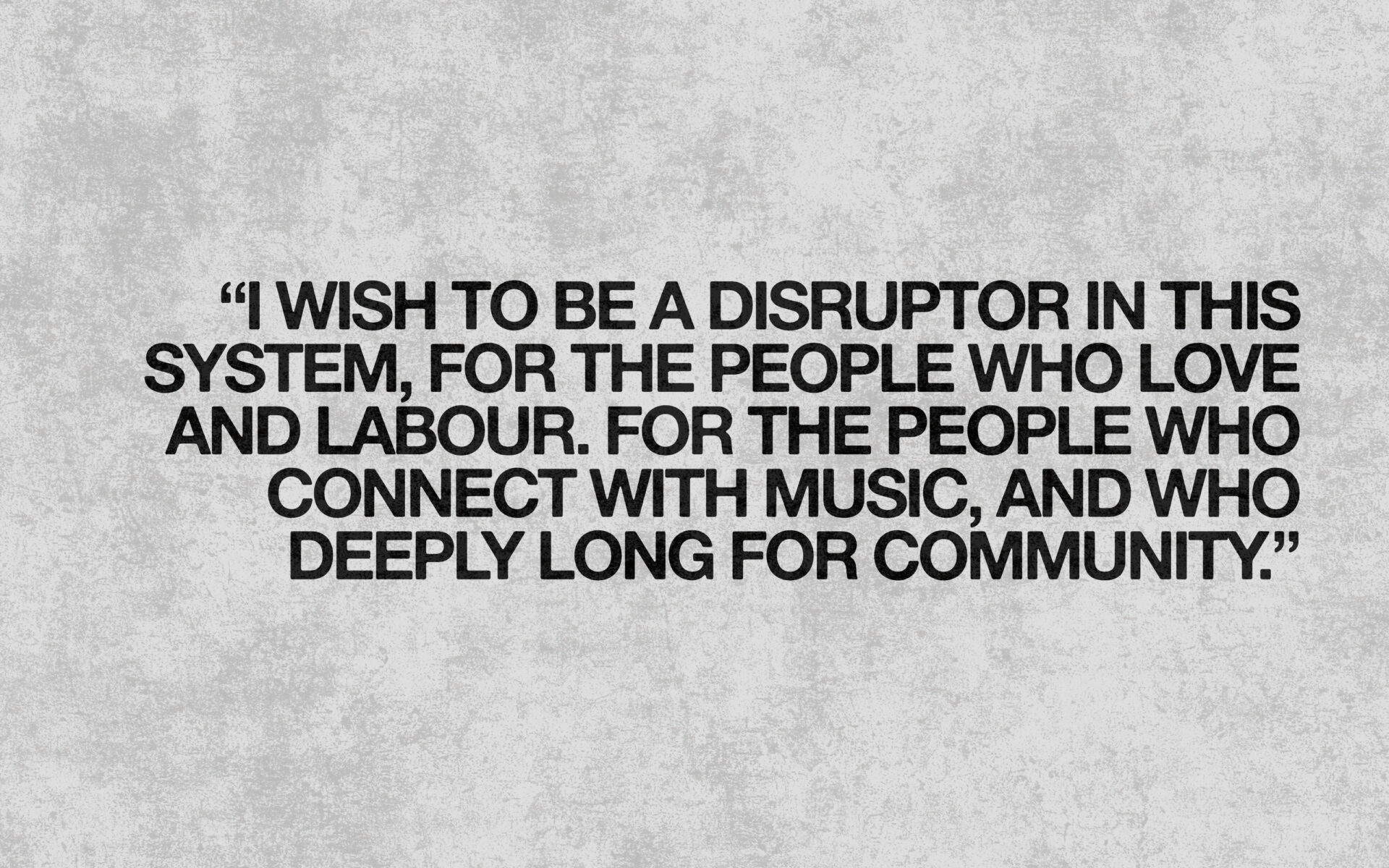
In my efforts—although small—I wish to be a disruptor in this system, for the people who love and labour. For the people who connect with music, and who deeply long for community. Delete your subscription services, and actively seek alternatives. One of the easiest is to purchase directly from the artists that you love by using platforms such as Bandcamp (for digital music). Bandcamp allows you to listen to music before purchasing it, and offers a sliding scale approach to purchasing—with some artists offering projects to even be downloaded for free. This is one of the only widely recognized platforms where artists receive 100 percent of their sales.
Go out and experience live music—scenes where people are building something real. Make and support physical mediums. Recognize that we, as consumers, out-number those who run these corrupt organizations, and we can empower ourselves to choose what we do and do not want to fund. If everyone treated their spending as their vote—we could change the world. Our political system is not operating at the speed at which we need to pass laws to regulate these companies, but we can starve these companies of their financial lifeblood. Let’s use that power deliberately—and build something better, stronger, and more sustainable in its place.