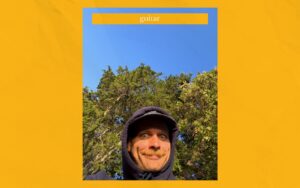


The radio host, DJ, and legendary vibe curator has just wrapped a six-hour early-morning shift at Hott 95.3 FM. His energy is unmatched considering it’s only 8 a.m., and just before taking over the airwaves he was warming up the crowd at Mimosa, one of Crop Over’s many legendary all-night, into-the-morning parties.
“That’s Crop Over for you. I’ll sleep when it’s over,” Le Roc shrugs from behind his DJ booth.

DJ Scott Le Roc at Hottt 95.3FM.
For the uninitiated, Crop Over is the biggest party of the year in Barbados — and it’s even bigger than you think. To keep up with a true Bajan, you’ll need the kind of stamina usually only found in diehard music fans on day three of Coachella. Maybe it’s the tropical climate, or maybe it’s the dangerously drinkable rum punch, but nearly everyone on the island joins in. All ages, all walks of life — all painting the streets with their own colour and style.
Opportunities to jump in are endless, as RANGE quickly learned when we landed on the island for the final week of joyful chaos. The most popular way to get your freak on (excuse the phrase) is at a fete — that’s what they call a party during Crop Over. But Bajans don’t fete like they do in North America. This is not a rave. This is not a live music rock show. This is NOT your typical summer festival. A proper Bajan fete is part block party, part marathon dance-off, and part sunrise sermon in the church of soca.
And everything — every beat, every dance, every sleepless night — builds toward the Grand Kadooment Day Parade, a vibrant carnival that takes over the streets. In the week leading up to that, it’s all soca, all the time.
A quick music lesson for those just catching up: In the Caribbean, soca is king — sharing the throne only with reggae, calypso, and gospel. But soca is its own beast. Born in Trinidad, it spread like a well-timed bass drop, with each island adding its own seasoning.
In Barbados, you’ll hear three main flavours: power soca (fast, loud, and built for burning every calorie you’ve ever consumed), sweet soca (smooth, melodic, and made for swaying with a drink in hand), and bashment soca (raw, bass-heavy, unapologetically Bajan, with a side of dancehall grit). Depending on where you wander — and whether the sun’s up or down — you’ll get a taste of all three. But during the final week of Crop Over, bashment soca dominates, blasting from trucks, stages, and every open window at a decibel level that would get you evicted back home. The crescendo comes the day after the parade, when thousands pack into the island’s botanical gardens for one last humid, sweat-drenched hurrah featuring the biggest names in soca, including crowd favourites Lil Rick, Mole, and Brucelee Almightee.
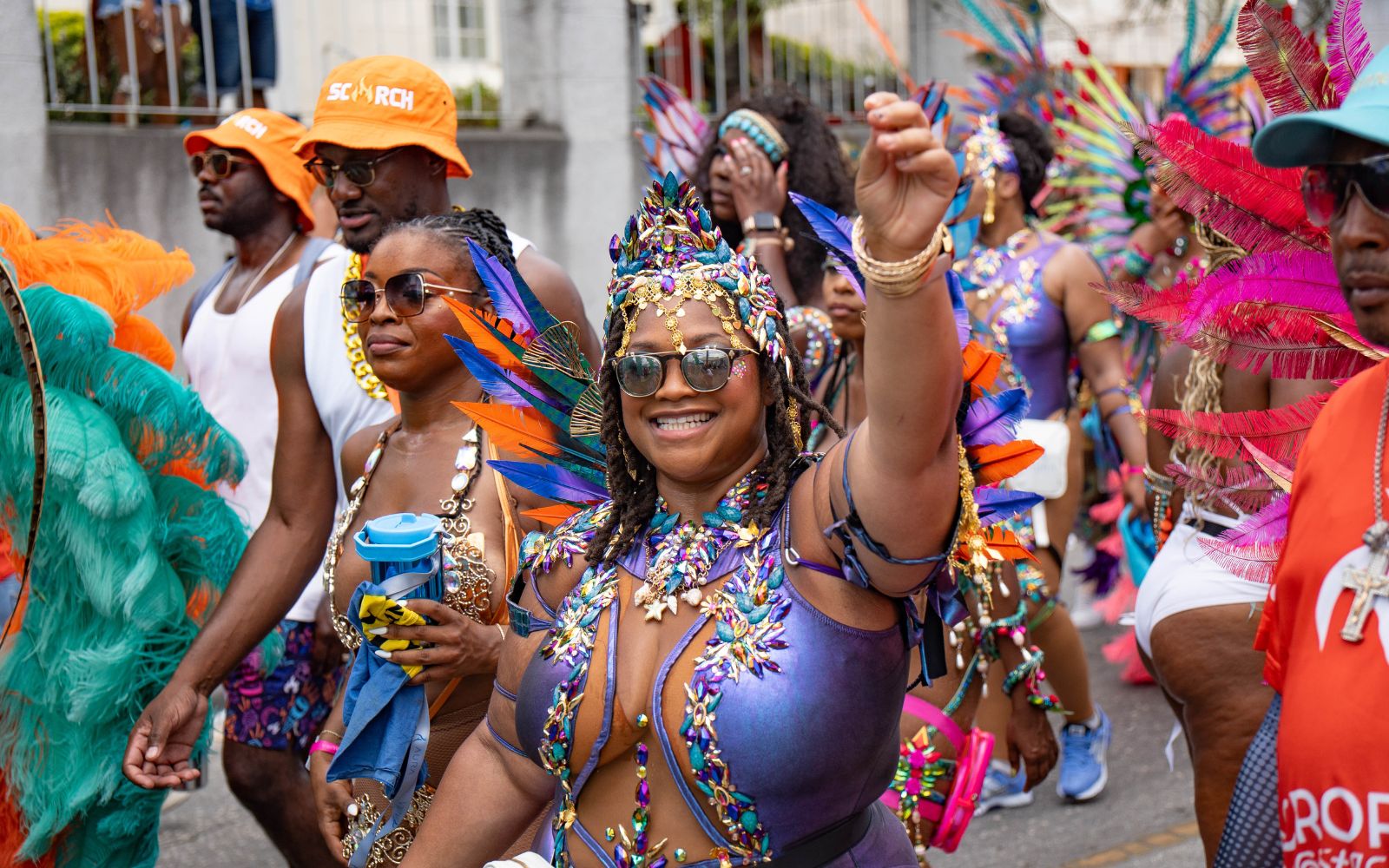
The Grand Kadooment Day parade.
But to really understand Crop Over and truly tap into the heartbeat of Barbados, we need to go back to Mimosa, the legendary party that was still raging when RANGE finished interviewing Scott Le Roc at the radio station. Thankfully, he offered us a ride.
“I might be biased, but there’s just a different feeling when Crop Over comes around,” Le Roc says, swinging open the door to his pickup — the driver’s seat for him, but the passenger’s seat back home. This is Barbados, baby; once a British colony, the island still drives on the left, so I snake my Canadian ass around to the other side and climb in. “When you experience Crop Over, you experience Barbados,” Le Roc continues. “The way we speak, the way we move. You get a real taste of the culture and a real feel for the people.”
Today also happens to be Emancipation Day, a national holiday marking the abolition of slavery in 1834 and celebrating the freedom and resilience of the Barbadian people. As we weave through the narrow streets of Bridgetown and out onto the winding country roads, I ask Le Roc what it means to him.
“It means that we as a people get to enjoy ourselves — free up, as we say in Barbados, which means party,” he says. “Free up, do whatever! It falls during our Crop Over season because it’s free up time now — this is party time.”

A snapshot from Mimosa 2025.
It’s now 9 a.m. and the Mimosa party is still raging at Pool Woods, a soon-to-be-renamed national park surrounded by beautiful, towering mahogany trees. Since Le Roc left the party last night at 2 a.m., a massive rainfall has dumped down on the event grounds, leaving the place muddier than Lollapalooza in 1995 — the same infamous year Pavement walked offstage mid-set after getting pelted with mud. But there was no mud being slung here, just a lot of muddy feet and ruined sneakers. In fact, people didn’t seem phased at all. On stage, the DJ is playing the certified 2025 soca jam “Pardy” by the King of Soca, Machel Montana. The track is blaring under the beating early morning sun and people are still dancing and grinding like there was no tomorrow, except that it already was tomorrow — depending on when you arrived, I suppose. To my left, a couple is grinding above an overflowing garbage can and I subtly pull out my iPhone to capture the moment.
The correct term for this brand of dance floor communication is Wuk Up. Over the course of the week, bouncing from fete to fete, I saw more butts gyrating against genitals than I could count. By high noon, our Nikes were sufficiently destroyed and the food stations had run out of food, so we decided to take off. Le Roc had to get back to the radio station to crown the winner of the People’s Monarch, the annual soca songwriting competition presented by the National Cultural Foundation.
The winner this year was Shaquille, whose track “Asphalt” is a sexy Wuk Up-inducing hit — and a double entendre that rewards a little imagination. Later that week, at an early morning breakfast fete appropriately called Brekfus, Shaquille performed his new anthem surrounded by the turquoise waters and white sand that line the property of the Hilton. It was hot as hell, but the crowd sang every word back at him in adoration as he commanded the microphone with style.
“I’ve always wanted to bring Barbados soca music back to a level where everybody loves it again,” Shaquille tells me privately in an interview later that day. “Winning this title put a lot of eyes on us and showed we have the talent to write songs like this — songs that people connect with here and abroad.”

Shaquille performing at Crop Over 25
Shaquille is part of a new wave shaping soca across the Caribbean. When asked what makes Bajan soca unique, he replies “Our accent. A lot of people try to sound like us when they sing, but they just can’t get it down. Every island has its own flavour — we have sweet soca and bashment — and that’s our contribution to the wider Caribbean soca sound.”
By the time Grand Kadooment Day arrives, the island has been building toward this moment for months. We watch from the shade of the Barbados Tourism hospitality tent as 22 different bands pass in a wave of feathers, sequins, and smiles. Each is led by a truck armed with a powerful speaker system strapped to it, and each has its own soundtrack, the bass rolling through the air like distant thunder. Aura — the band that would normally feature native Bajan Rihanna — dances by in a kaleidoscope of turquoise and gold. She’s sitting this year out since she’s expecting her third child later this year, but her brother holds it down behind the decks, grinning as the crowd winds past in the afternoon sun.
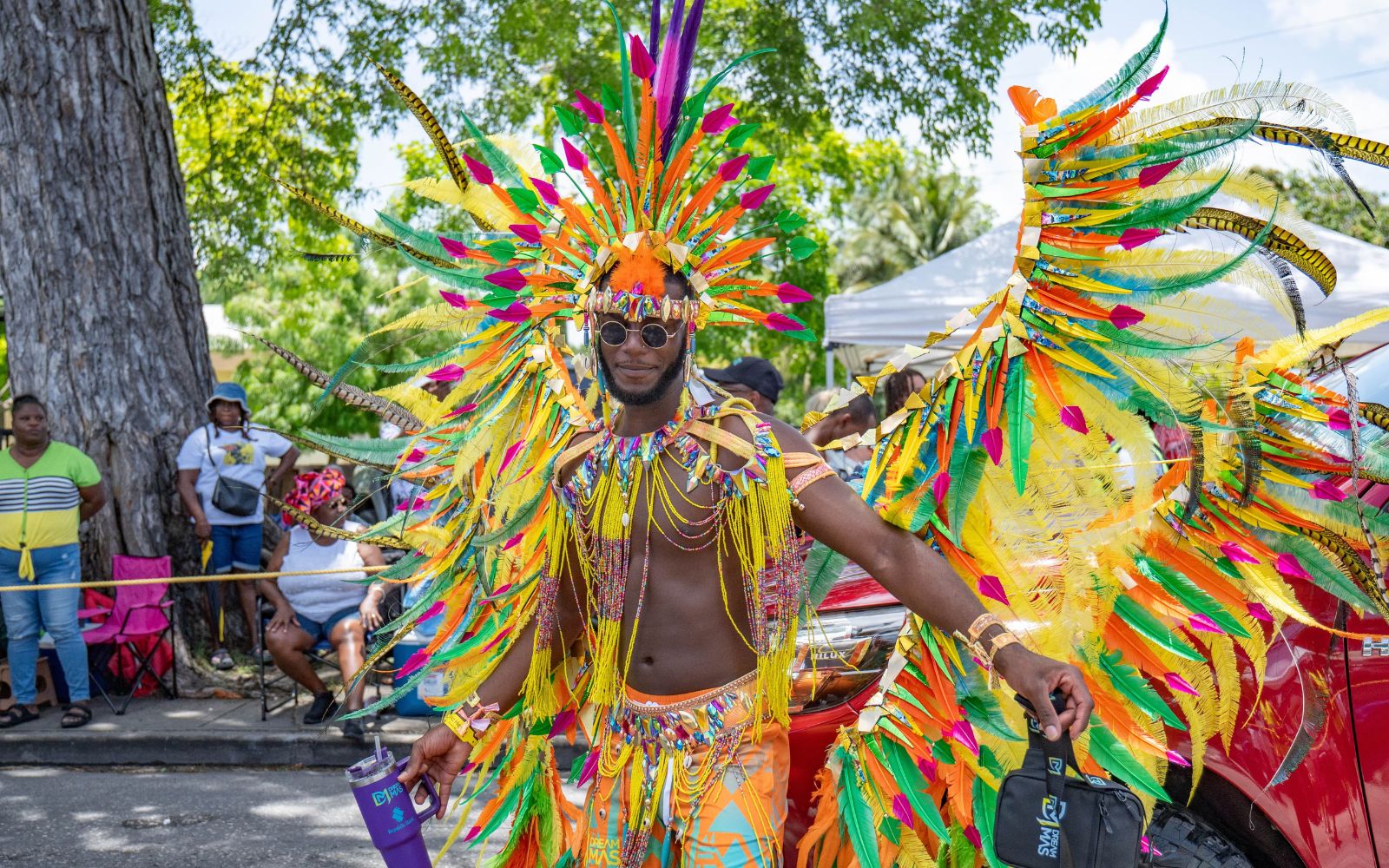
From our spot, it’s a living postcard. Glitter clings to sweaty skin. The scent of grilled fish drifts in from a nearby vendor. Spectators and masqueraders shout greetings as if everyone knows each other — and maybe here, they do.
It’s the ultimate “free up” moment, the kind Le Roc talked about on that first morning. Crop Over might officially mark the end of the sugar cane harvest, but what it really celebrates is the heartbeat of the island — its music, its people, and the joy they take in moving together.
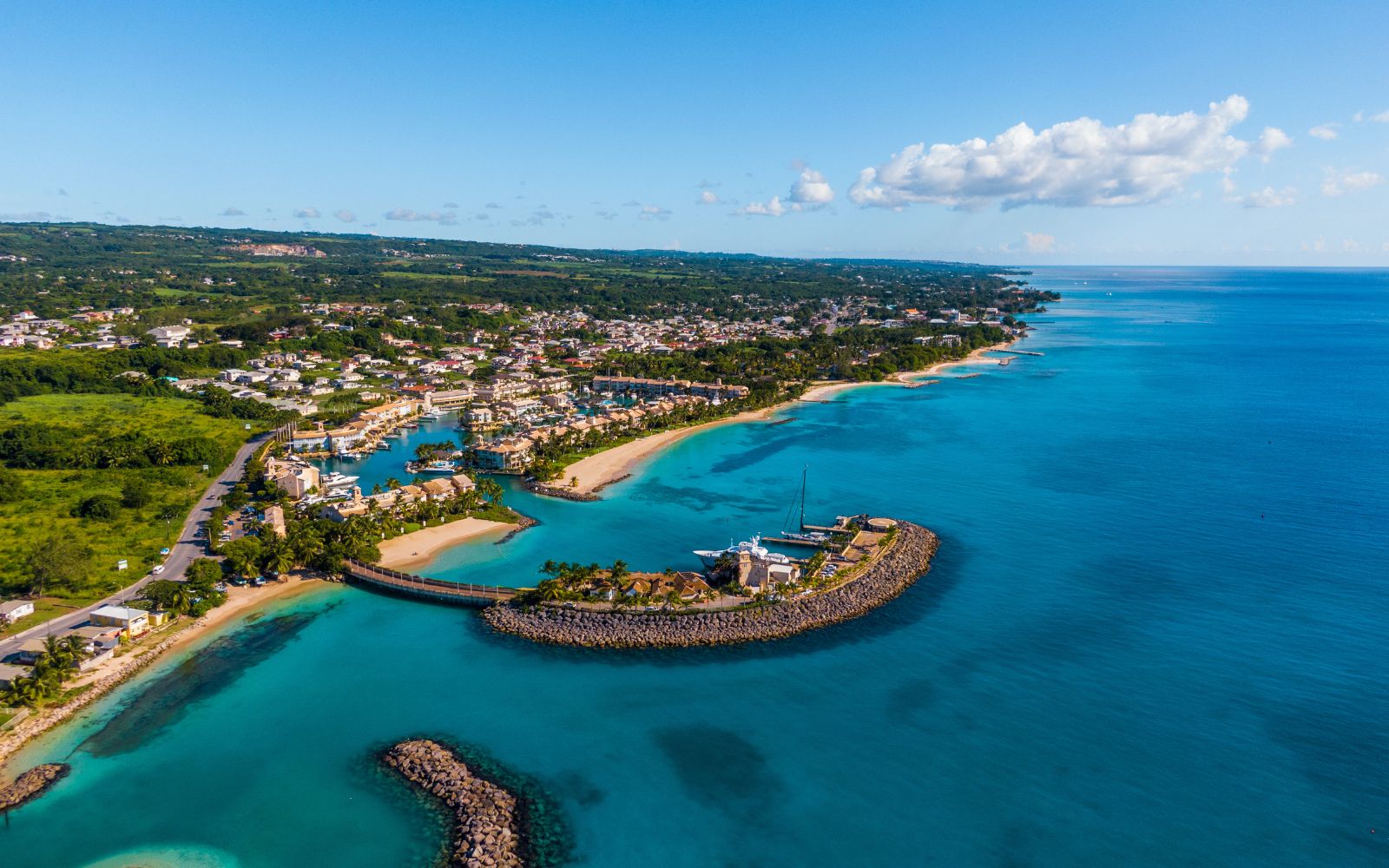
While this week is Barbados at full volume, the island has a way of getting under your skin any time of year. As Le Roc told me before we parted ways: “If you come to an all-inclusive, don’t just stay inside the doors. Come outside and explore Barbados. Walk around, buy some food on the street. You can taste the whole Caribbean here.”
He’s right. Whether you come for the fetes or for the quiet, Barbados will feed you — body, soul, and maybe even your stamina. And if you’re anything like Scott Le Roc, you can always sleep when it’s over.