
History frequently labels artists who push against the grain as “fearless,” but “If there is no fear in your life, then you probably don’t feel very alive,” Kapranos contests. He keeps pushing in search of more fitting words: “Contrary, bold, audacious! Yeah, that’s the word! You have to be audacious to overcome fear.”
“Rather than being fearless, I think it’s greater to know fear, to understand fear, and to overcome fear,” Kapranos continues. “That’s where you get the greatest reward in life. That’s what makes you feel alive. Think of all the great things that you do within your life that involve overcoming a sense of fear, whether it’s the first time you get behind the wheel of a car – fuckin’ ‘ell – or whether it’s asking your significant other out on the first date. Understanding fear and overcoming it, that is life-affirming.”
Kapranos experienced the life-affirming power of overcoming fear when he proposed to his partner last year. “I’d managed to go through 50 years of life without ever getting married and presuming that I never would, and then suddenly, it seemed like the right thing to do,” he says. “And that’s been very rewarding. I’m glad I finally did it.”
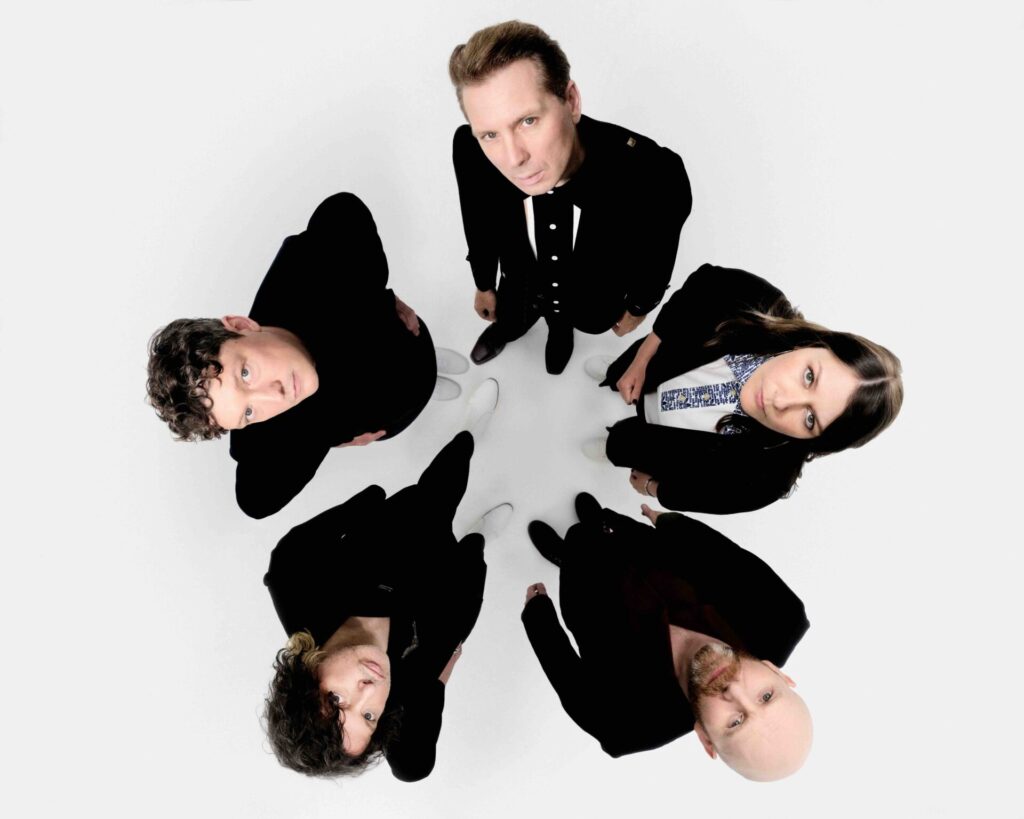
Despite having once taken to heart early 20th Century writer and literary critic Cyril Connolly’s sentiment that “There is no more sombre enemy of good art than the pram in the hall,” Kapranos no longer fears he’ll have to sacrifice his creative life for family. “Not only is there space for creativity, but marriage contributes towards it as well. It gives you a shitload to write about!”
Kapranos ruminates on commitment and conquering fear throughout Franz Ferdinand’s upcoming sixth album, The Human Fear, out January 10 via Domino. Refreshing their creative approach, the band prepared a songbook of new material before entering the studio. The extra songwriting rigour resulted in an opulent rock album that swaggers with Franz Ferdinand’s usual foot-stomping energy, while also pushing their penchant for dynamic, unpredictable twists and turns to a whole new level. But one particular song sounds quite unlike anything Franz Ferdinand have written before.
“‘Black Eyelashes’ was about exploring my Greek identity,” says Kapranos, whose father is Greek. “I grew up like a lot of children of immigrants: you have a strange connection with your roots simultaneously with a distance from it.”
In Greek music, “You often hear songs refer to black eyelashes, black eyebrows, or black eyes,” Kapranos explains. Over a Greek-influenced melody, Kapranos sings in his ancestral tongue, “He’s not Greek / He doesn’t speak Greek / Why doesn’t he speak Greek? / He’s not Greek.” “That’s what I would hear when I was a kid. And yet, I knew I was Greek. Even the way I gesticulate, the way I talk, my temperament – a lot of the way I understand the world is Greek.”
Audacious and brimming with vigour, The Human Fear proves that after 22 years, Franz Ferdinand’s creative momentum is still, like Kapranos’ Greek identity, undeniable.