Inside the Montréal musician’s shift toward ease, openness, and a sound that refuses to collapse even as it teeters.
By Judynn Valcin
Photos by Dominic Berthiaume & Delphine Snyers
Published on
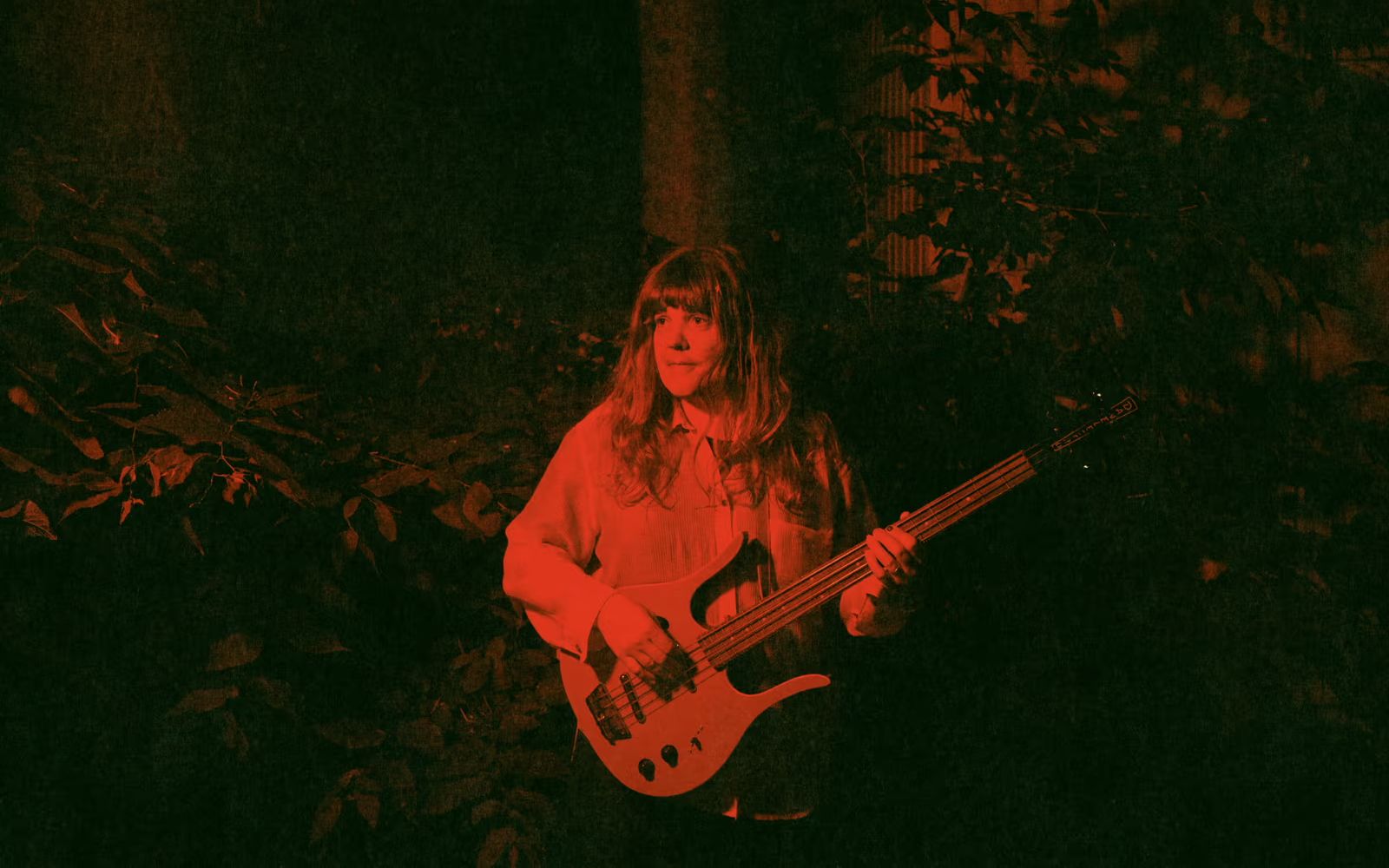
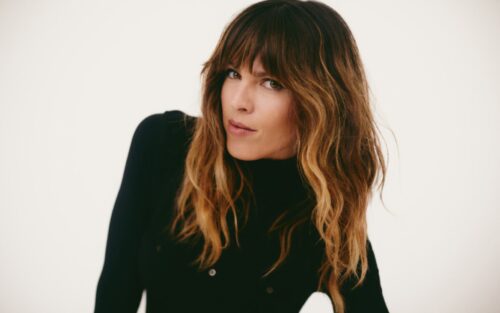
Rain clings to the windows at Caffè Italia as Hélène Barbier sinks into a chair with her cappuccino, her voice soft but sure. For someone whose music thrives in tension—shaky guitars against ricocheting basslines, matter-of-fact lyrics balanced on melodies that feel almost too clean—she speaks with remarkable ease. Panorama, her third solo album and her most expansive yet, arrives after more than a decade spent rooting herself in Montréal’s underground and learning, piece by piece, how to trust her instincts.
“When I first came here, I wasn’t a musician,” she says, almost surprised by the memory. Originally from Picardie, France, Barbier landed in Montréal in 2012 for a six-month internship at a music publishing company. But like so many Montréal transplants, six months quickly dissolved into something more like a calling. “When I was meeting people at the time in Montreal, like 12 years ago, every time I would ask ‘Do you play music?’, everyone would say yes. So I ended up saying ‘What do you play?’ instead, because I assumed everyone I was meeting was a musician.”
The city’s density of creative energy—and the easy, lived-in quality of its DIY scene—pulled her in. She picked up the bass, moved into a house full of musicians, and slowly realized she wasn’t going back to Paris anytime soon. “I couldn’t see myself go back and live in Paris in a tiny apartment… I just wanted to stay, even if it meant not having a perfect job.”
Her first formative years in Montréal came through Moss Lime and later PHERN, two scrappy bands that gave her the space to experiment and the confidence to trust her ear. From 2014 to 2017, she honed her instincts through jangly riffs, surf-rock sway, and the kind of messy, democratic decision-making that defines most young bands. When those projects came to a natural end, she found herself craving something more direct—something that reflected her own voice without compromise.
“It’s a bit selfish, but it’s just I have the last say on what direction the song is gonna go,” she laughs. “Obviously, I didn’t make it all alone, but it’s nice to be in charge.”
Going solo didn’t mean reinventing herself as a lone wolf. Instead, it simply reframed collaboration. Barbier now surrounds herself with a trusted circle who can challenge her ideas but still leave the final call in her hands. “There’s Ben Lalonde on the guitar… my husband Joe… my friend Claire, who first played guitar and now plays keyboard and flute and backup vocals… and on the drums there’s Thomas Molander and Samuel Gougoux. They share the job because they’re both very busy people.”
She lights up describing the give-and-take of this setup, how comfortable she feels saying no when something doesn’t fit. “My husband would sometimes be insistent, but I have the last word because it’s my band,” she says with another laugh. “So that’s pretty okay.”
That sense of self-possession extends to language, which has become a quiet but defining evolution in her music. Barbier’s debut, Have You Met Elliot?, was entirely in English. Her sophomore album, Regulus, introduced two French songs. Now, Panorama stretches further with three. “I guess initially it was out of shyness,” she says. “When I speak English, since it’s not my mother tongue, there’s some kind of filter… when it’s in French, it felt more serious. It had to be like really good poetry. I thought I wasn’t capable of writing something. But then I realized you can sing a song about whatever you like. There’s less distance. When it’s in French, it’s more personal.”
If Regulus carried the rawness of urgency—“I wanted it to be done quickly… I didn’t care if it sounded raw or a bit shaky”—Panorama opens up with patience and intention. She wrote the songs slowly over three years, allowing long, restorative pauses between bursts of creativity. “I was thinking like, I’m just going to take the time I need to make it sound good,” she says. “Sometimes I was working on a song, then for a couple months I wasn’t working on music at all, and then going back…”
That slower pace created room for unexpected textures and collaborators. Meg Duffy of Hand Habits contributed a guitar part Barbier had been imagining but couldn’t play herself. “I knew exactly what I wanted… I would need to take some lessons to be able to do what I really wanted the guitar to sound like. They said ‘Give me the direction,’ and it was exactly what I wanted. Even better.”
Elsewhere, familiar Montréal faces—Ada Lea, Melanie Venditti, Wes McNeil—drift in and out like the city itself leaving fingerprints on the record. Barbier’s description of “Marcel,” a standout track, captures the album’s alluring friction. “It’s a song I play the guitar on, so it’s really shaky… everything is about to fall down. And I wanted some epic guitar on that, almost like metal… a very mature guitar on a really shaky song.” She grins. “I thought that was really cool.”
These tensions—between shaky and mature, earnest and playful, intimate and expansive—run throughout Panorama, but what anchors it is Barbier’s newfound steadiness. “It’s funny because Moss Lime was my first band, and at first I had the imposter syndrome because I wasn’t a musician. I started in my 30s. But now, with this record, I feel like I’m a musician.”
Then she adds something even more revealing: “I don’t want to be sorry. This is the music I play.”
The title Panorama arrived once she understood what she was trying to capture. “The songs were written over three years… so much happened. Your mood changes, you feel it. It was always coming back to me: it’s just like a wide view of small moments.”
She hopes listeners pick up on the humour in the record, too. “The first line of the first song is ‘This one is merrier.’ It was a joke… I wanted to start the record by saying ‘I’m not complaining in this one.’” She smiles. “I want people to sense the humour in it. It’s a relaxed outlook on life.”
When she shrugs, it’s gentle, not dismissive. “I hope the few people it will reach will like it… I’m happy if it touches some people. And I hope I get to play some shows.”
Panorama is exactly that: a generous, gently tilted view of a life lived in small revelations—held together by a musician finally confident enough to stop apologizing and enjoy the view herself.