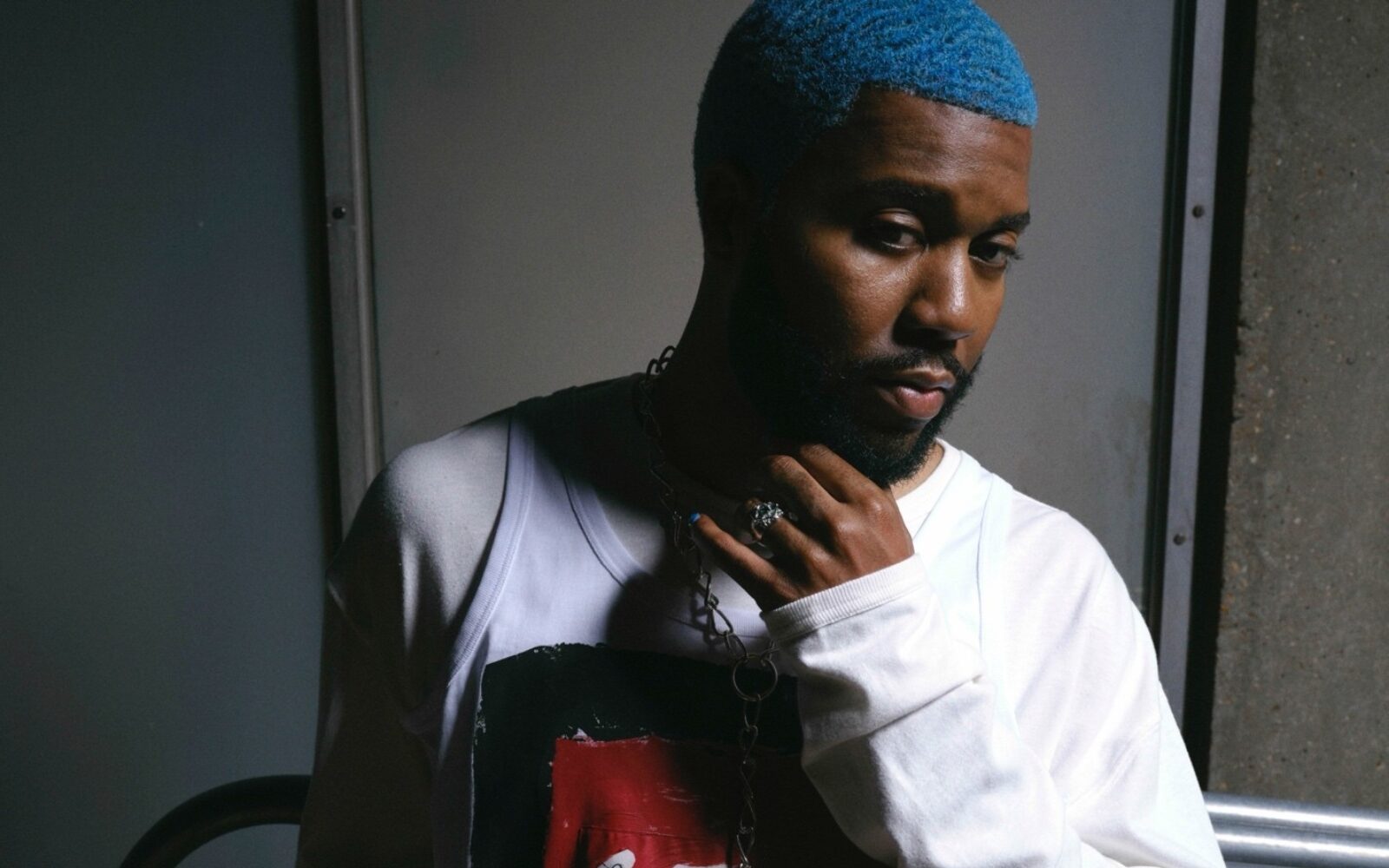
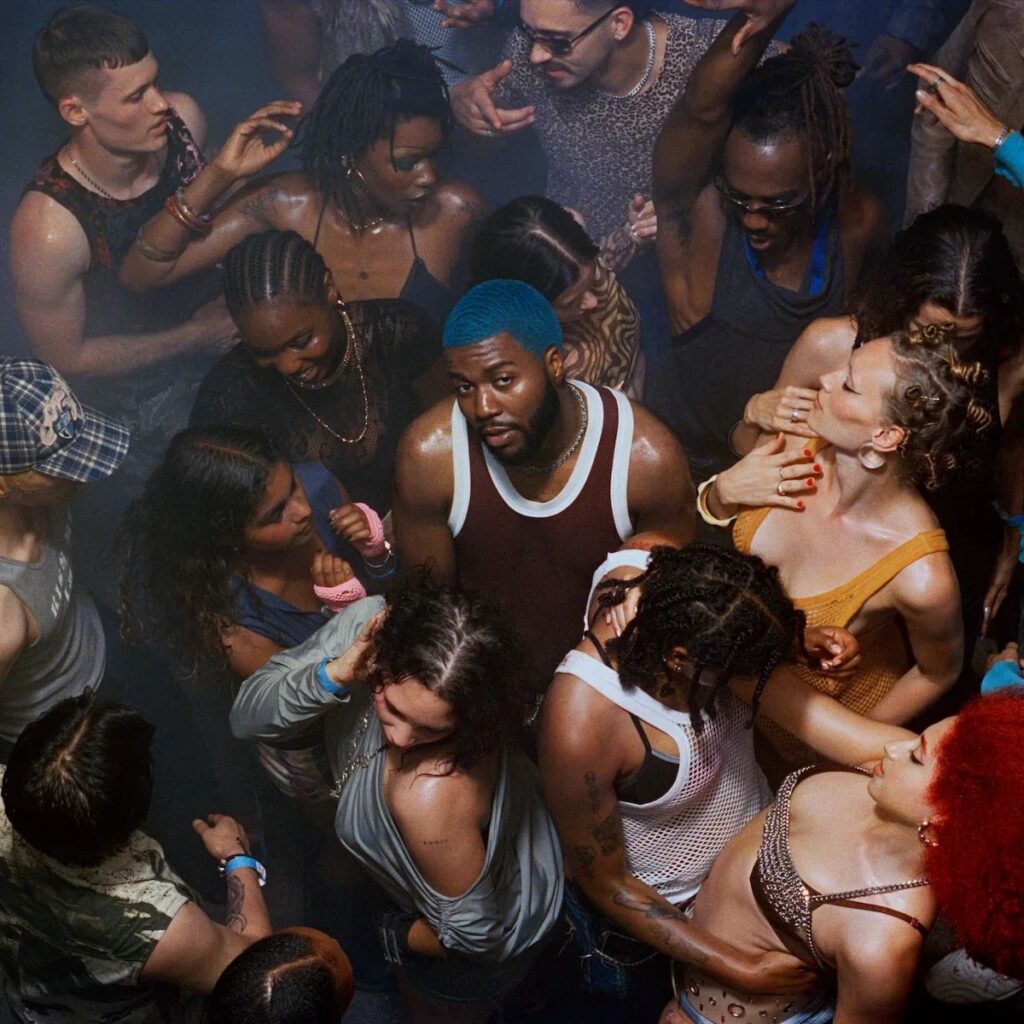
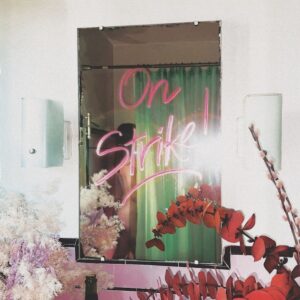
The moment that Khalid went public about his queerness, expectations shifted—both from listeners and the artist himself—and his fourth album, after the sun goes down, feels like a response to that shift. It’s a record that navigates newfound freedom while wrestling with the pressures that come from increased visibility. He leans into a sound that borrows from late-’90s and early-2000s R&B—the Darkchild-produced “out of body” being the most obvious—but doesn’t wear it like a costume. Instead, the album plays like a careful negotiation between homage and personal expression, revealing how Khalid situates himself within, and sometimes just outside of, the era he’s referencing.
The album’s singles (“in plain sight,” “out of body”) sketch out a soundscape that nods to the era’s most distinctive producers without settling into pastiche. On “tank top,” a mid-tempo bounce builds around a pitched-up vocal sample that feels like a playful nod to ’90s house party anthems. Meanwhile, “true” rides a hypnotic loop of chant-like vocals and swirling synths, evolving into a woozy, distorted bassline that balances kinetic drive with contemplative stillness. These tracks anchor the record’s sound in familiar territory while Khalid’s nuanced delivery pulls the music firmly into the present, a modern, layered reinterpretation rather than a simple throwback.
after the sun goes down could easily exist in the early 2000s without raising an eyebrow—it’s comfortable enough to blend into the era’s familiar R&B-pop landscape, but cautious enough to avoid rattling its boundaries. It doesn’t reinvent the wheel, nor does it need to. What makes the record compelling is less its ambition than its ease: Khalid sounds like an artist rediscovering the pleasure in his craft, shedding the weight of expectations and the cautiousness that shadowed his earlier work. There’s a looseness here, a willingness to revel in the moment, that feels almost radical in its refusal to perform for the audience’s doubts. In that, the album is subversive—not because it breaks new ground, but because it claims a space where Khalid simply gets to be himself.