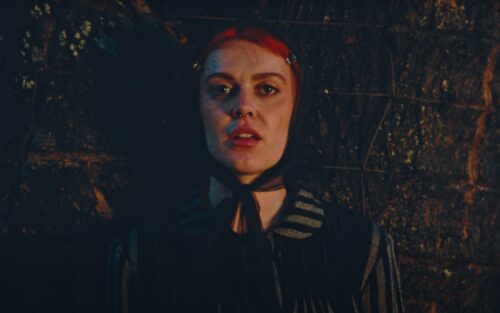

Titled simply Perrie—a move that signals either radical honesty or a refusal to overthink—the album isn’t chasing reinvention so much as reintroduction. Across a tight set of stadium-sized choruses and serotonin-delivery systems, Edwards leans into a mode of pop that’s increasingly out of fashion: melodic maximalism, emotional legibility, vocals you can actually hear. It lands somewhere between the post-millennial catharsis of Kelly Clarkson and the heart-on-sleeve shimmer of artists like MUNA—music built for both car stereos and that one scene in every coming-of-age film where someone finally runs toward something.
Perrie doesn’t mark a break with the past so much as a recalibration of its terms. After a decade enmeshed in the choreography of stardom, Edwards claims a space as a soloist that’s both familiar and stubbornly hers. The album’s an exercise in controlled release: anthemic choruses and confessional moments alike, calibrated for maximum emotional impact without conceding to the disposable demands of streaming-era pop. This is an artist wrestling with what it means to be “authentic” in a genre that packages identity as product.
Perrie caught up with RANGE to talk about shedding the burden of performative compliance, embracing creative agency, and why the hardest freedom is simply being unapologetically herself.
Perrie is your debut album as a solo artist, and it’s self-titled. How do you feel like this project shows people who you are in a way that Little Mix couldn’t?
I think it’s just really authentically me. The concepts, the lyrics, the sounds… even sonically, it’s so me. It’s the music that I love the most: that anthemic pop with big melodies and big vocals. I think it’s very autobiographical as well, which is why I wanted it to be self-titled. My stories and experiences were put into these songs, so it just made sense for it to be called Perrie, and I’m glad that I did now, because I think that it just works.
Speaking of anthemic pop, this album is very cathartic, almost like a release. Did it feel that way when making it?
Absolutely, I feel like when I was in the studio writing the music, stadium pop was very much in my head. I wanted the melodies and the choruses to have a payoff, almost like a reward that you get. If I wasn’t getting a serious serotonin hit through the chorus, I was like “That’s not it. We need to change the melody.”
I love when music makes you feel something, and it makes you feel that lift off of energy. I think that that’s what a lot of my choruses do, which I’m really proud of. I know that’s not necessarily like the trend at the moment or whatever… but I just love music that feels like it could live forever.
Did you have a hard time translating that feeling into the music? Or did it come naturally through the process?
Most of the sessions would start off as a conversation about a concept that I wanted to do, and then we’d come up with lyrics from the conversation itself, if that makes sense. There’s a song on there, “Sand Dancer,” that stemmed from me wanting to do a song about growing up and why I developed a love for singing. I think that most of the concepts just kind of stemmed from these conversations happening, and that felt good.

Was there a time when you were making the album where you felt like everything clicked? Like you understood yourself in a way that you didn’t before?
Weirdly, I think in the new year. That sounds so cheesy… “New year, new me!” But I had a bit of time off—a bit of time away from making music—and it just felt like things weren’t going anywhere, which made me feel a bit stressed. I just felt this pressure, and I felt like I didn’t know where to turn or what to do. Then, after the new year, I was itching to get back into the studio, and I knew that I wanted to bring more of myself to the table. Those sessions that I did in the new year were the ones that got me the most excited.
Then, after a few great sessions, I listened to the album, put it in order, decided on the singles, sent it to the head of my label and was like… “Here’s the album, here’s the tracklist, here are the singles.” I feel like I just took charge in a way that I hadn’t before, and I wish I did that more in the beginning.
Do you think that having that control is something that’s going to be vital for you going forward?
Absolutely, I’m a very indecisive person, I can’t help that, it’s just my personality. I’m not the type of person to walk in and demand attention. It’s quite hard for me to do that. However, I do know what I want, so I think it’s just a matter of getting out of my own head and getting the people around me to get on board as well.
I’ve learned so much during this process, the whole journey of going solo. I’ve realized that I can’t please everybody, I’m fucking sick of it. It’s draining. I can only do what makes me feel fulfilled, and if that’s not good enough, that’s it. I can’t do more than that. I can’t pretend to be someone that I’m not, and I can’t make music that I don’t love. I’m in a place now where I’m content and happy with whatever the outcome is, because I feel good.
Was it a long journey to get to that point? Embracing that “this is me, take it or leave it” attitude?
Yes, I didn’t used to feel that way. I always felt like I needed to please everybody. I felt like I needed validation from everyone. Not just my team and my label, but the fans. I was so scared of letting people down that I lost myself a bit. Being the people pleaser that I am, it just wasn’t rewarding to me. I think that sometimes you need to just follow your instincts and do what’s right for you, and then what comes from that comes from it.
What aspects of this album will you carry forward when making your next?
Definitely more of the big vocal moments. I know what my fans love, and that’s what I love doing. I love a ballad, and I think just more lyrics and concepts that I know people will relate to. And, of course, the fun, cheeky, upbeat, feel-good stuff as well. I would love to just explore the sound that I’ve found now, make it bigger, and keep building on it.
By Cam Delisle
The provocateur's new video single is a visceral, queer power trip.
By Stephan Boissonneault
Nate Amos revisits a decade of stray ideas and turns them into his most compelling record yet.
By Khagan Aslanov
Mike Wallace’s electro-punk project premieres the hypnotic, percussion-driven video for "Certain Days."