

Lee is also preparing for the release of her forthcoming solo album, 72RHR, due on Hand Drawn Dracula next spring. The album, with its title referencing our resting heart rate, is written, arranged, performed, recorded, engineered, and produced entirely by Lee, reflecting the D.I.Y. approach she’s always carried into her creative practice. “Do it yourself, create a community with artists you like and respect,” she says. “Challenge yourself and make neat stuff together. On bigger projects with a larger canvas, I’ve learned to delegate, but I will always want to get my hands dirty.”
While “Broken English” doesn’t appear on 72RHR, its tension and tenderness hint at what’s to come.
“I’m a student of life, here to learn,” Lee continues. “You’ve got to be a bit blessed and deranged to pursue the calling of art, because you’re likely not going to make money at it. The world is on fire. Systems are breaking down and giving rise to new possibilities. We are at war with each other, and we hate ourselves. To care and to love is an antidote, to care is a key. All of this resonates for me in the song “Broken English.”
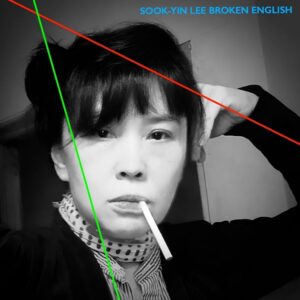
What drew you to cover Marianne Faithfull’s “Broken English,” and how did you translate its revolutionary spirit through your own language?
I met up with James Mejia from Hand Drawn Dracula, and he proposed that I take on a cover. My labelmates, Bonnie Trash, had covered Nick Cave and the Bad Seeds’ “Red Right Hand,” and it rocked my socks off. I rose to the challenge.
My choice of song was an immediate gut response. “Broken English,” the title track of Marianne Faithfull’s 1979 comeback album, was among a collection of astonishing records I inherited from a literary punk in my neighbourhood where I grew up as a kid. It was a huge inspiration to me. Ms. Faithfull’s life and music are gut-wrenchingly beautiful. In “Broken English,” her raw and soulful voice sings the truth of the human condition. Everything about the song, from its driving pulse, to glass-shard guitar chords, and her weary conviction come together to express the futility of war.
It’s been almost 50 years since “Broken English” was released and Marianne Faithfull is no longer with us. Yet, “Broken English” is especially relevant today, on both geopolitical and personal fronts regarding global conflict, war, genocide, inequality and exploitation, while addressing interpersonal confrontation, intensified by technology and social media, which can lead to toxic polarization, designed to pit people against each other. Divide and conquer is a domination strategy from an old playbook. “Broken English” seeks to break the cycle by asking a simple question, “What are you fighting for?”
The original “Broken English” video was confrontational and political, while your version repurposes imagery you documented in Buenos Aires—what stories or emotions did you find in those images that connect to the song’s message today?
I was invited to screen my latest movie, PAYING FOR IT, at Buenos Aires Festival Internacional de Cine Independiente, a film fest featuring outstanding movies. I loved the city and everyone I met. What stands out in Buenos Aires is its abundant book stores; often several in a city block. People love to read, they love art, culture, politics, living and partying. They’re passionate about ideas and, far from being snooty, they tend to be down-to-earth, authentic, warm, and considerate. The city reminded me of New York City before gentrification – an affordable, grimy metropolis pulsing with wild energy. Ancient spaces coexist with modern ones. We visited underground tango clubs and drank coffee in historic grand cafés that are protected from destruction by the city.
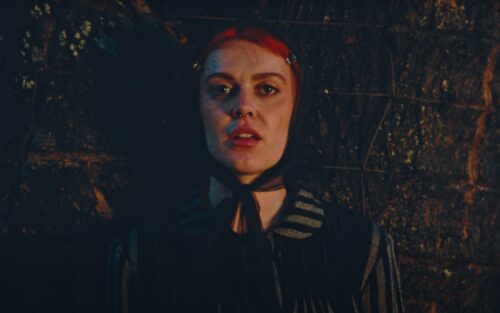
Over the last century, Buenos Aires has experienced profound social and political upheaval marked by waves of populism, military coups, economic crises, and mass protests, reflecting Argentina’s broader struggle between authoritarianism and democracy. Listening to unsettling accounts about the enforced disappearance of citizens and troubling events from the fairly recent past gave me a better understanding of their perspective. I walked around a lot in Buenos Aires and stumbled upon many evocative landscapes and documented them. When it came to making a music video for “Broken English,” I knew I would incorporate these images.
You recorded and performed every instrument and electronic element yourself—what did that level of control and intimacy unlock for you creatively, and how did your hacked technology and noisemakers shape the texture of your version?
I’ve been engineering, performing and producing music for years now, beginning during the lo-fi movement, as a reaction to expensive studios and “expert” producers. I learned gear, embraced the D.I.Y. process, and produced my albums myself. Now, there are affordable tools with decent sound, and you can set up a sweet recording studio in your space. My approach to music-making and recording is like gardening. I water and tend to the songs. I gather sounds in a manner I learned while producing radio documentaries in the field.
One of the defining sounds of my version of “Broken English” originates from a fragment of a video I shot of a politician talking nonsense, that I twisted and messed up beyond recognition. It became a thread woven into the fabric of the song. Plus, it sounds cool.
In movies, it’s called “mise en scène,” the notion that everything counts. I extend that idea to music-making. The instruments you choose to play inhabit particular qualities, as do the notes you play, the way you sing, and record, and such. I’ve been developing a style that merges machine-made sounds and distressed tech with what I call “dirt and bone”–organic instruments and noisemakers–improvisation, melodic vocals and poetry. To me, it is a sonic reflection of this moment in time.
It was such a treat to work with brilliant source material and an exceptional song. In terms of tempo, it is in keeping with the constraints of the songs on my upcoming album, recorded at 72 BPM. I listened to “Broken English” and broke it down to what struck me as its main elements and emotional qualities; rage, sorrow, despair, defiance, and set out to re-tell it through my own lens.
This upcoming album that you just announced, 72RHR, references a resting heart rate, with each song composed at 72 BPM—what does that tempo represent to you philosophically or emotionally? And are we safe to assume this is going to be a very chill album?
You are never safe. Assume nothing. Life is a mysterious and wild ride. 72RHR is a reference to your optimal resting heart rate when one is relaxed. On the surface, it may seem like a contemplative, chill pulse, but it’s much more than that. Two decades ago, while going through a very rough patch, I added a tool to my kit, and that is Vipassana meditation. Like swimming, once you learn how to meditate, you never lose your practice, and you can apply it anytime and anywhere. For me, meditating is a gamut of experiences that involves boredom, great physical pain, panic, bliss, shame, hunger, you name it. Meditation makes you wrestle with the detritus of your mind and neurotic thinking, with the aim of letting it be, and letting it go. Far from passive-listening, the songs on 72RHR take listeners on a sonic ride through discord and harmony.
Opposite from a resting heart rate—what gets your blood racing these days?
I ate dinner tonight at the delicious and nutritious Buddah’s Vegan Restaurant on Dundas Street in Toronto. Owner Sammy is a standup guy who let me shoot a bunch of scenes in PAYING FOR IT there on his day off. Tonight, Sammy slid me a special dish that’s not on the menu, and it was so yummy, it made me stop thinking.
On the weekend, I had an extended three-hour visit with David Cronenberg, filmmaker inspiration, in a café during a storm. It was a meeting of minds, and we just kept riffing from one idea to the next at a high velocity. It was very fun, candid, and informative. I have only two friends, filmmaker Andrea Dorfman and cartoonist and visual artist, Jillian Tamaki, that I can have such a dense exchange of interesting ideas with. David is the first fellow I have engaged with in such a manner (except for maybe two of my gay guy friends). Good convos are greaaaat!
Anything else you’d like us to know now that you’ve announced this new solo outing for Spring 2026?
I’m stoked for you to hear 72RHR. It should be out in the spring of next year. I write, record, engineer, produce and perform all the instruments and machines. I work with my longtime genius mixer, Steve Chahley, and Kevin McPhee masters. Dylan Gamble plays synth on a song.
In spring 2026, my movie PAYING FOR IT, a live-action adaptation of the best-selling graphic novel by cartoonist Chester Brown, opens in New York City at the legendary Quad Cinema in Greenwich Village on Friday, Jan. 30, 2026, with more cities to come. I’m hoping the movie knocks your socks off. It’s a grassroots operation and I appreciate and urge everyone to help spread the word.