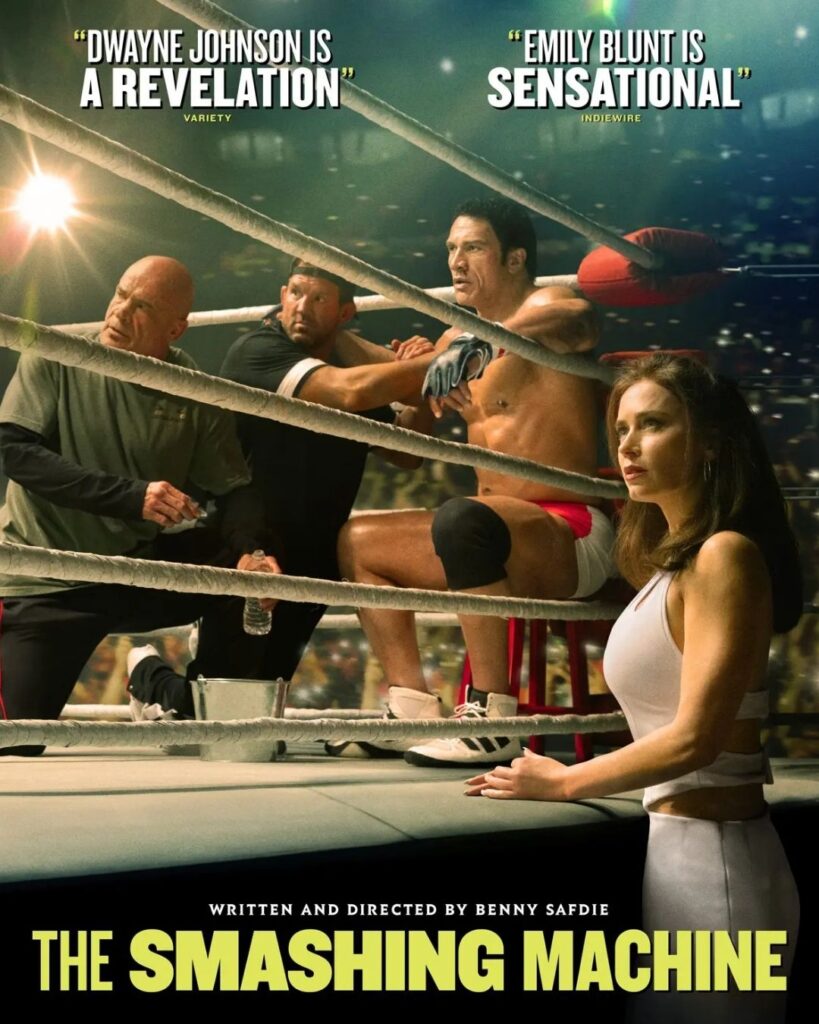
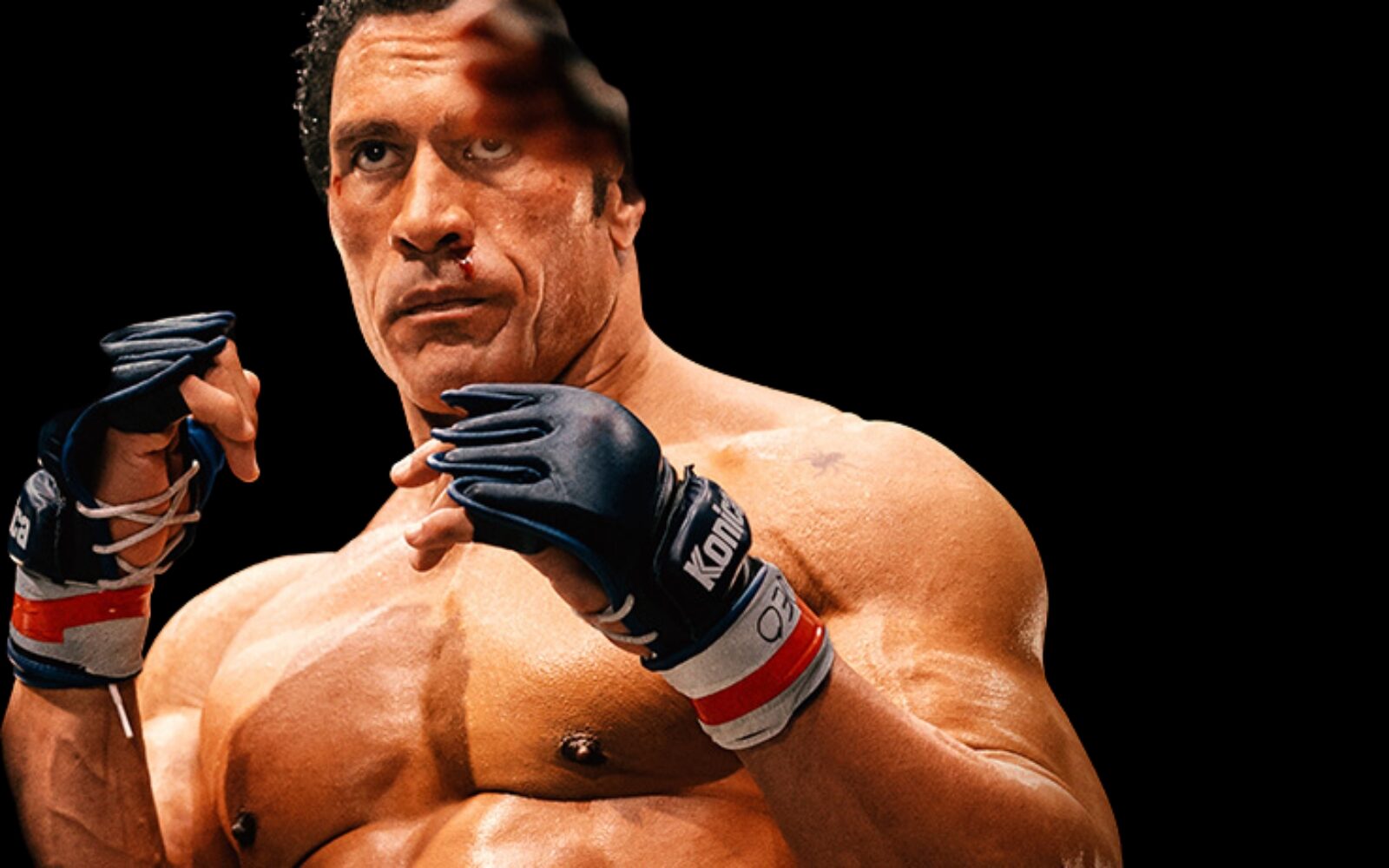
Director Benny Safdie, one-half of the genius, frenzied mind behind Uncut Gems, returns with another intimate, hyper-real character study in The Smashing Machine. This time, he sets his sights on the troubled life and times of UFC and MMA pioneer, Mark Kerr—an oft-neglected hero of the sport. Captured in a quasi-documentary style, it navigates the personal demons, domestic troubles, and substance abuses that Kerr battled with outside of the Octagon. Yet, for all its attempts to topple the tired, trite conventions of the sports drama, it routinely labours to exist as anything other than an Oscar vehicle for Dwayne “The Rock” Johnson.
As a result, The Smashing Machine succumbs to its own set of cliches, fixated by a need to showcase its lead’s acting chops even if it comes at the cost of cogent, captivating storytelling. For long stretches, Safdie’s film feels disjointed, loosely held together, and thoroughly lacking in narrative momentum—especially when it strangely seems more interested in an adjacent fighting figure than its titular subject during its closing act.
But, for all its warts, it’s hard not to invest this anti-climactic, miserabilist tale of personal redemption. While Safdie struggles to elicit the same layered, stylistic sensibilities that made previous efforts like Good Time such a rich character work, he still manages to tap into a slight but moving stream of earned emotion.
Taking place from 1997–2000, The Smashing Machine finds Mark Kerr at the peak of his career. Yet, his success in the ring is outweighed by his troubles outside of it. Addicted to deadly painkillers and a self-destructive need for success, he routinely clashes with the limits of his body and his devoted partner, Dawn (Emily Blunt), who’s tortured by the toll he pays. As the film follows Kerr from his Arizona home to brutal tournaments in Tokyo, his true, spiritual battle comes into focus.
Captured in wonderfully textural 16mm, Safdie imbues The Smashing Machine with an intimate yet gritty sheen. Though, despite its best efforts, the film feels at its most immersive and absorbing when it cuts away from its headlining fights. Framed with handheld compositions that echo its documentary source material, Safdie’s film brims with honesty and sincerity in its portrait of internal, domestic turmoil.
It’s here where Johnson’s soft-spoken performance can finally weaponize our expectations. While far from revelatory and a tad one-note, Johnson excels in the small moments, as a gentle giant who, like many of us, struggles to find his dharmic role in the world. He’s particularly authentic in a sequence where, despite him taking endless physical abuse, he’s afraid of going on a carnival ride.
Although The Smashing Machine struggles to rise above being an Oscar-bait vehicle for The Rock, it (mostly) survives as an earnest slice of life, one that finds universal woes in an atypical life.
The Smashing Machine is in theatres on October 3rd.